
Understanding NYC Local Law 144: A Guide for Enterprises

Updated: May 9
The Importance of Fairness and Transparency in Hiring
At its core, Local Law 144 is about fairness and transparency in hiring. It specifically targets the use of Automated Employment Decision Tools (AEDTs). These tools include any software or automated system that employs AI or statistical modelling to assist employers in making hiring or promotion decisions.
Think of tools that automatically screen CVs, analyse video interviews for personality traits, or rank candidates based on test scores. The law mandates three key actions for any employer using such a tool for a role based in New York City:
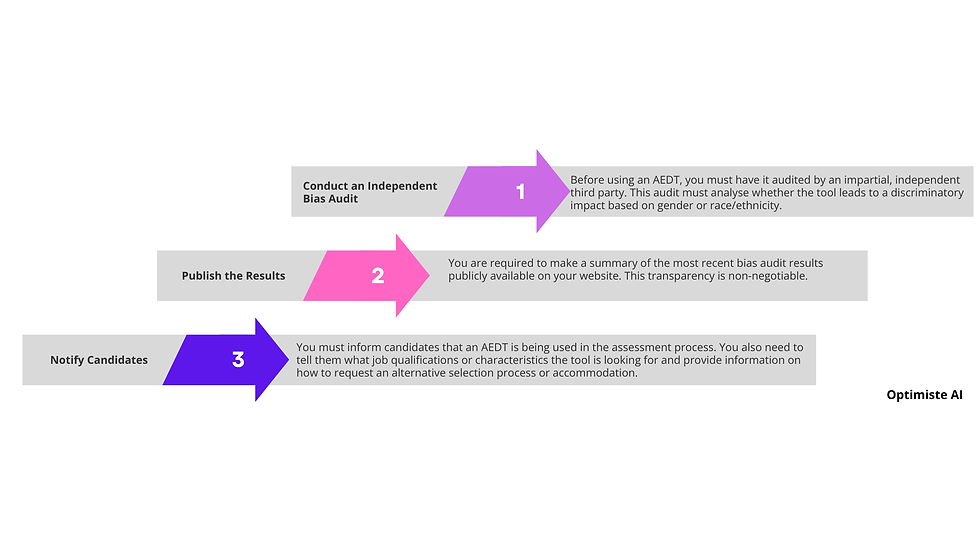
Most importantly, if you use AI to help you hire in NYC, you must get it checked for bias, disclose the results, and inform your candidates about its use.
Why This Law is So Critical for Your Organisation
It's easy to dismiss this as just another piece of local compliance, but that would be a significant mistake. Here’s why this law is crucial:
Reputational Risk is High
In an era where corporate ethics and diversity are under intense scrutiny, failing a bias audit—or neglecting to conduct one—can seriously damage your brand. It signals a lack of commitment to fair hiring practices, making it harder to attract top talent.
Significant Financial Penalties
Non-compliance comes with hefty fines that can accrue daily for each violation. These financial penalties can quickly add up, transforming an efficiency tool into a major liability.
It Reaches Beyond the US
If you are a UK-based organisation hiring for roles located in New York City, this law applies to you. The digital nature of modern recruitment means geographical boundaries are no longer a shield from regulatory responsibility.
Preparing Your Business: A Practical Checklist
1. Map Your AI Landscape
The first step is to conduct an internal audit. Do you know every tool your HR and recruitment teams are using? Identify every piece of software involved in your hiring and promotion pipeline, from sourcing and screening to interviews and assessments. Determine which of these qualify as an AEDT.
2. Engage With Your Vendors
The responsibility for compliance rests with you, the employer, not the software vendor. Contact your HR tech providers immediately. Ask them:
Are you aware of Local Law 144?
Have you facilitated independent bias audits for your tool?
Can you provide us with the necessary data and support to conduct our own audit?
If your vendor is unprepared, you need to consider the risk of continuing to use their tool.
3. Source an Independent Auditor
You cannot audit yourself. You need to find a qualified, independent third party with expertise in data science, fairness metrics, and employment law. This is a new specialism, so start your search early.
4. Update Your Processes and Policies
Transparency: Designate a clear, accessible place on your careers website to publish the audit summaries.
Notification: Create standardised language to include in job applications and communications, informing candidates about your use of an AEDT and their rights.
Alternatives: Establish a clear process for candidates who request an alternative screening method.
5. Think Bigger Than NYC
Use this law as a catalyst to build a comprehensive AI governance framework for your entire organisation. This isn't just about ticking a box for one city; it's about embedding ethical AI principles into your company's DNA.
The Future of AI in Hiring
As we move forward, the landscape of hiring will continue to evolve. The integration of AI in recruitment processes is not just a trend; it’s a revolution. However, with great power comes great responsibility.
By ensuring compliance with laws like NYC Local Law 144, we can foster a hiring environment that values fairness and transparency. This is not merely a legal obligation; it’s an opportunity to enhance your organisation's reputation and attract diverse talent.
To see how turingrails can help you ensure compliance, schedule a demo today.
Embracing Change for a Better Future
Navigating the complexities of AI in hiring requires a proactive approach. We must embrace the changes that come with these new regulations. The journey may be challenging, but the rewards are significant.
Building a Culture of Compliance
Creating a culture of compliance is essential. This means not only adhering to laws but also fostering an environment where fairness and transparency are valued. Training your team on the importance of these principles can lead to better hiring practices.
Engaging Stakeholders
Engaging all stakeholders in the process is vital. This includes HR teams, hiring managers, and even candidates. Open communication about the use of AEDTs can build trust and enhance the candidate experience.
Continuous Improvement
Finally, we must commit to continuous improvement. Regularly reviewing and updating our practices ensures that we stay ahead of the curve. This is not a one-time effort but an ongoing commitment to ethical AI governance.
By embracing these changes, we can navigate the complexities of AI in hiring while ensuring that our practices align with ethical standards and legal requirements. Let’s lead the way in responsible AI governance.



Comments